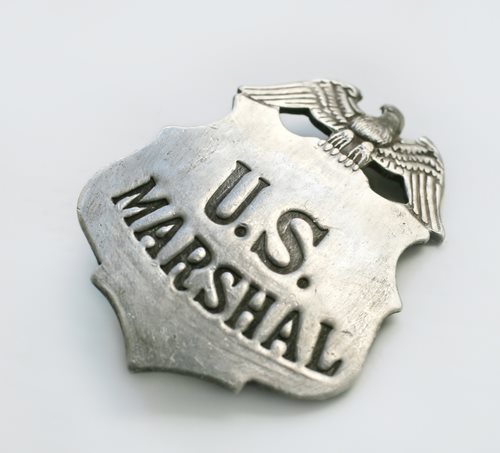
What You Must Know About The U.S. Marshals
📅 2026 Update: Changes in U.S. Marshals and Related Agencies
Since the original article was published, there have been significant updates involving the U.S. Marshals and related agencies. Key changes include structural updates within the Drug Enforcement Administration (DEA) and a broader focus on organized crime through the Executive Office for Organized Crime Drug Enforcement Task Forces (OCDETF).
The details of the earlier article continue further down the page.
🌐 DEA's New Structure
As of August 4, 2026, the DEA is now under the jurisdiction of the Criminal Division. This change was approved by Acting Attorney General Todd Blanche. It reflects an effort to streamline law enforcement operations related to drug enforcement.
🔍 OCDETF's Expanded Mission
The OCDETF's mission has broadened since 2011. It now focuses on multi-agency investigations into all forms of transnational organized crime. This expansion aims to enhance cooperation among different law enforcement agencies.
🏛️ DEA's History
The DEA was formed in 1973 by merging various agencies. It includes the Bureau of Narcotics and Dangerous Drugs and the Office for Drug Abuse Law Enforcement. Understanding its history helps clarify its current roles and responsibilities.
🕒 Application Processes and Deadlines
Details about application procedures, deadlines, and eligibility criteria for DEA services are not clearly available. For the latest information, individuals should consult the official DEA website. This uncertainty emphasizes the need for direct communication with the agency for accurate guidance.
📌 Key Points to Remember
- DEA Structure: Now part of the Criminal Division.
- OCDETF Mission: Expanded to include transnational crime.
- DEA History: Established in 1973 through mergers.
- Application Info: Details often not specified; check official sources.
- Direct Contact: Essential for accurate and up-to-date information.
💡 Tips for Understanding U.S. Marshals and Related Services
Consider discussing your specific situation with an attorney to understand how it may relate to the U.S. Marshals.
📃 Know the DEA's Role
The DEA primarily focuses on combating drug trafficking and abuse. Understanding its role can help in cases involving drug-related investigations or offenses.
📞 Contacting the U.S. Marshals
For issues related to the U.S. Marshals, individuals should reach out directly for specific inquiries. They can provide assistance regarding apprehensions, extraditions, and the status of federal fugitives.
🏢 Understanding OCDETF
The OCDETF coordinates efforts among various agencies to tackle organized crime. Knowing its purpose can offer insight into broader investigations that may involve the U.S. Marshals.
📅 Stay Updated
Application processes and eligibility for services can change. Regularly check the official websites for updates to stay informed about any new requirements or procedures.
🛡️ Use Official Resources
When seeking assistance related to the U.S. Marshals or DEA, always use official channels. This ensures that the information you receive is accurate and trustworthy.
🏆 Free Options Ranked by User Reviews (2026)
Currently, there are no national paid services that meet the review threshold in this area. Therefore, this section focuses on free government and nonprofit resources linked to the U.S. Marshals and related services.
🥇 1. Drug Enforcement Administration (DEA)
The DEA offers resources related to drug enforcement and education. It serves individuals seeking information on drug use, trafficking, and law enforcement actions regarding drugs.
🥈 2. Executive Office for Organized Crime Drug Enforcement Task Forces (OCDETF)
OCDETF helps coordinate investigations across various agencies. It aims to dismantle organized crime operations, making it a vital resource for understanding complex criminal activities.
🥉 3. U.S. Marshals Service
The U.S. Marshals Service provides essential law enforcement services, including apprehending fugitives and managing asset forfeiture. They play a critical role in maintaining justice and public safety.
4️⃣ Office of Community Oriented Policing Services (COPS Office)
The COPS Office promotes community policing initiatives. It offers resources and support to law enforcement agencies, helping them engage with communities effectively.
🔎 What to Check Before Paying for Help
- 💰 Ensure the service is affordable and within your budget.
- 🔍 Research the provider's reputation and reviews.
- 📑 Confirm that the service is relevant to your needs.
- 🔗 Verify the provider's credentials and experience.
❓ Frequently Asked Questions
❓ What is the role of the U.S. Marshals?
The U.S. Marshals are responsible for apprehending fugitives, managing and transporting prisoners, and executing federal court orders. They play a key role in the federal law enforcement system.
❓ How can I report a fugitive?
To report a fugitive, you can contact the U.S. Marshals Service directly. They encourage the public to provide tips and information to assist in apprehending wanted individuals.
❓ What is the process for applying for DEA services?
Specific application processes for DEA services are not detailed. For the latest information, it is best to consult the official DEA website or contact them directly.
❓ What support does OCDETF provide?
OCDETF coordinates efforts among federal, state, and local agencies to combat organized crime. They focus on investigations that target drug trafficking organizations.
❓ How do I connect with the DEA?
Individuals can connect with the DEA through their official website. They provide contact information for various inquiries related to drug enforcement.
❓ What is the history of the DEA?
The DEA was established in 1973 to combat drug abuse and trafficking. It merged several agencies to create a more effective federal drug enforcement body.
⚖️ Recent Cases Related to U.S. Marshals
Recent court rulings have addressed various issues involving the U.S. Marshals and their functions. These rulings can impact how law enforcement operates and interacts with the public.
- Puerto Rico Court Reverses Consumer Department's RulingTribunal De Apelaciones De Puerto Rico/Court of Appeals of Puerto Rico · April 29, 2026
- Puerto Rico Court Denies Appeal on Correction Department BonusesTribunal De Apelaciones De Puerto Rico/Court of Appeals of Puerto Rico · April 23, 2026
- Court affirms ruling in Chaky v. Florida Commission on Offender ReviewDistrict Court of Appeal of Florida · June 12, 2026
- Texas Military Department wins appeal on sovereign immunityTexas Court of Appeals, 13th District · June 11, 2026
You can browse more rulings on the news page to find out about the latest developments in this area.
End of October 2026 Update
What are the U.S. Marshals?
The U.S. Marshals is a Federal agency that operates within the United States of America that is responsible for the regulation, operation, and undertakings with regard to the standards and practices latent within Federal investigations and criminal procedure undertaken by the Federal Government of the United States with regard to individuals suspected, charged, apprehended, and convicted of Federal – and interstate – criminal activity:
U.S. Marshals Quick Facts
The following details outline the administration of the U.S. Marshals:
The U.S. Marshals was founded on September 24th, 1789; it is considered to be the single oldest law enforcement agency in existence within the United States of America; however, prior to 1969, the United States Marshals Service operated independently of the Federal Government
The headquarters of the U.S. Marshals are located in Washington D.C.; however, an Office of the U.S. Marshals service exists within each individual State and district of the United States
The Director of the U.S. Marshals is Stacia Hylton
U.S. Marshals Associated Terms and Agencies
The following terms and Government Agencies are associated with the operations and undertakings of the U.S. Marshals:
The Federal Court System
Subsequent to the arrest and capture of individuals suspected of criminal activity relating to the Federal government, the U.S. Marshals will typically place those individuals in Federal custody; as a result, their criminal trial or hearing will be heard before a Federal Court. A Federal Court is the legal venue responsible for the judicial review and sentencing of legal affairs concerning the Federal Government of the United States.
The U.S. Marshals Service as a Government Agency of the Executive Branch
Government agencies are defined as organizations, councils, and offices operating under the jurisdiction of the Federal Government of the United States of America; each federal agency retains specific administrative jurisdiction over specific facets latent within the operations of the United States Government:
The Relationship between the United States Marshals Service and the Department of Justice
The Department of Justice is a federal agency within the Executive Branch of the government responsible for the supervision of the United States Marshals Service, which is considered to be a sub division within the USDDOJ; the primary objectives of the Department of Justice include the regulation and administration of legal activity, statutory legislation, and lawful behavior with regard Federal government. The USDOJ not only serves to ensure that the Federal government acts in accordance with the law, which includes all branches of the Federal Government.
U.S. Marshals Legality
Administrative Law is the legal field associated with events and circumstances in which the Federal Government of the United States engages its citizens, including the administration of government programs, the administration and operation of government agencies, and the establishment of a legal, regulatory federal standard. The main office of U.S. Marshals can be contacted through the Department of Justice; however, each individual State has its own regional United States Marshals District or State Office:
U.S. Marshals
c/o U.S. Department of Justice
950 Pennsylvania Avenue, NW
Washington, D.C.
20530
(202) 307-9100